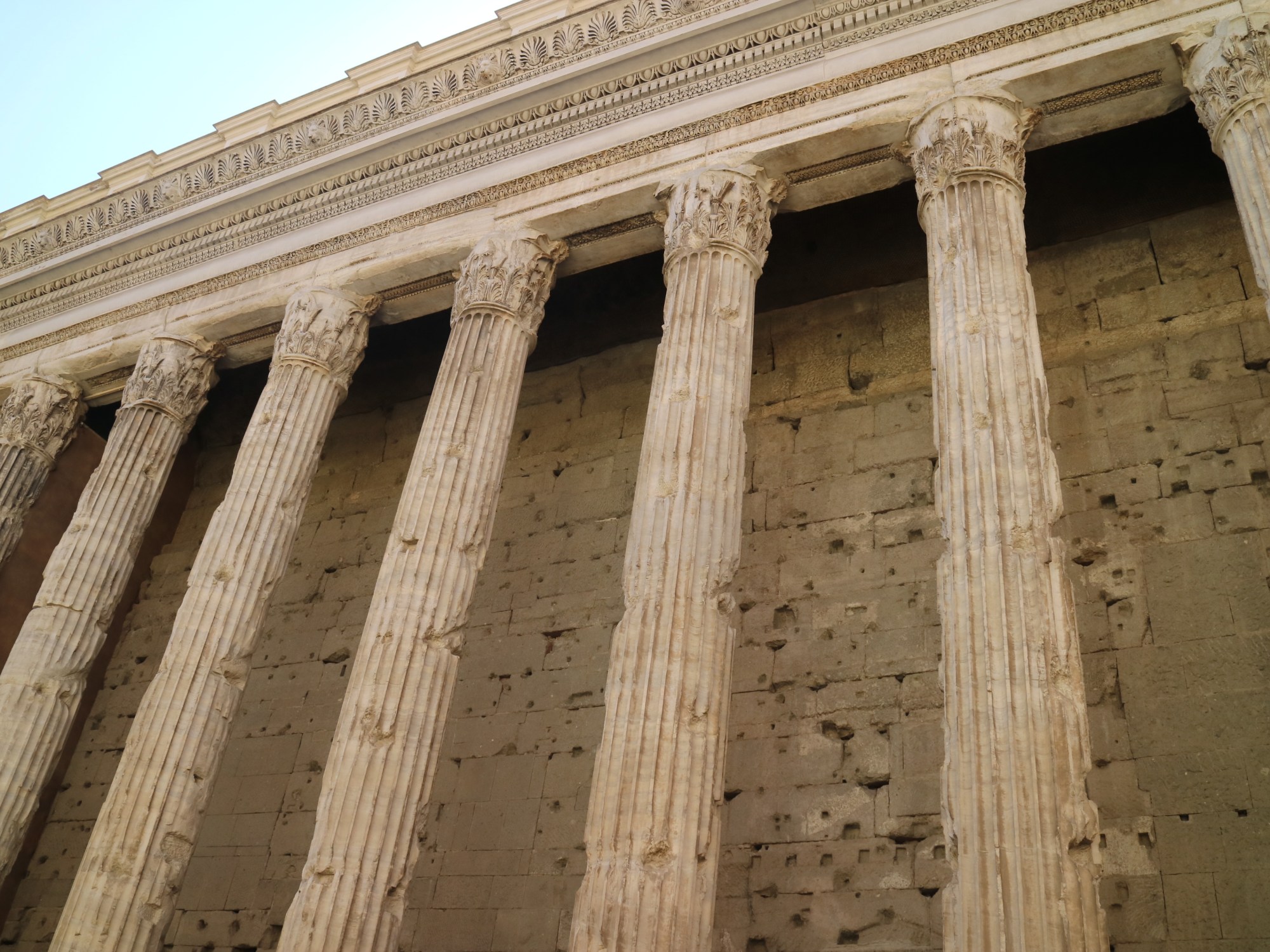
The origin of the world’s greatest empire, the eternal city of Rome is in itself a city-wide museum. No wonder its locals, no matter how busy they are, prefers to get their morning coffee sitting down and watching people from all walks of life marvel at the ancient ruins right at their doorstep. Because, who would not turn their heads at the fruits of labour of the renaissance masters when it’s free to look at? I’ve been on this city twice, by the power of wishes made at the Trevi fountain, but like a favourite dish, you would never really get enough of it. Rome had been so special to me because it is the first city I came to see as a solo traveller and also the first city I’ve seen twice, (apart from London and Edinburgh that I still consider my second home and in a sense not a destination) only on the second time, I get to tour my friends around with the lessons I’ve learned the first time. Rome taught me how to be a tough traveller, in some ways.
It is not possible to see all of Rome in two days, what’s possible in that short span of time, is to see the highlights. It is the 3rd largest city in Europe next to London and Paris and getting around is challenging if you won’t plan ahead. Ironically, even though Rome has once been the greatest, its railway system is the smallest in Europe with only three train lines, leaving you with options to either walk or wait for the bus. The fact that Rome is built on top of another city, catacombs, aqueducts and ancient ruins makes it hard for urban development to take place, anyway the history and antiquity of the city is what makes Rome worth seeing. So, I did what I always do on my trips, I visit the farthest destination first which makes the Vatican City first on the list.
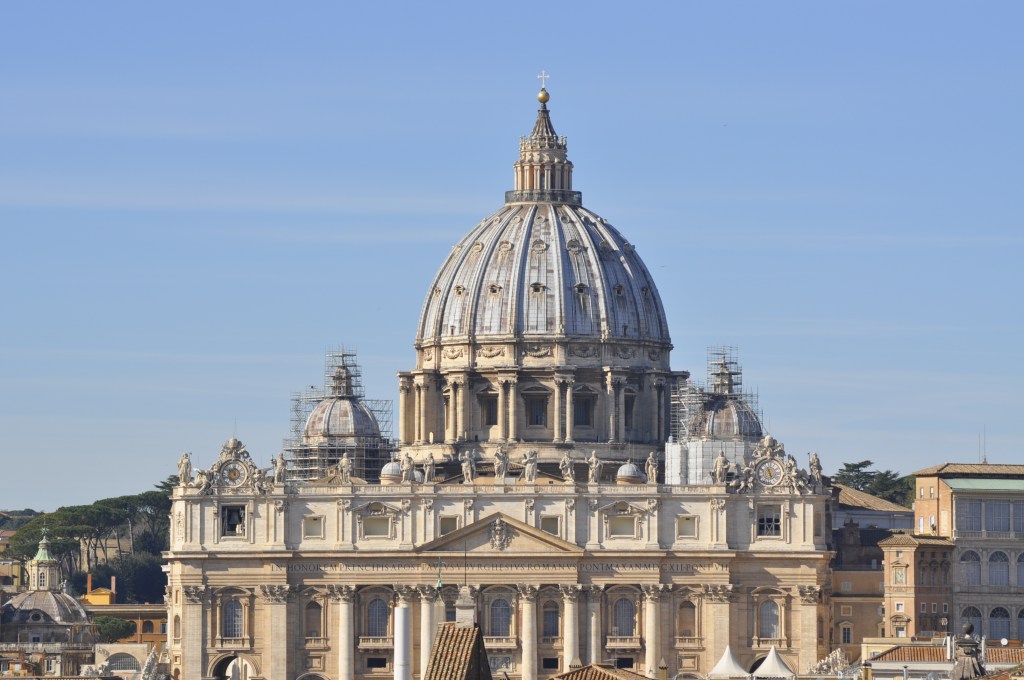
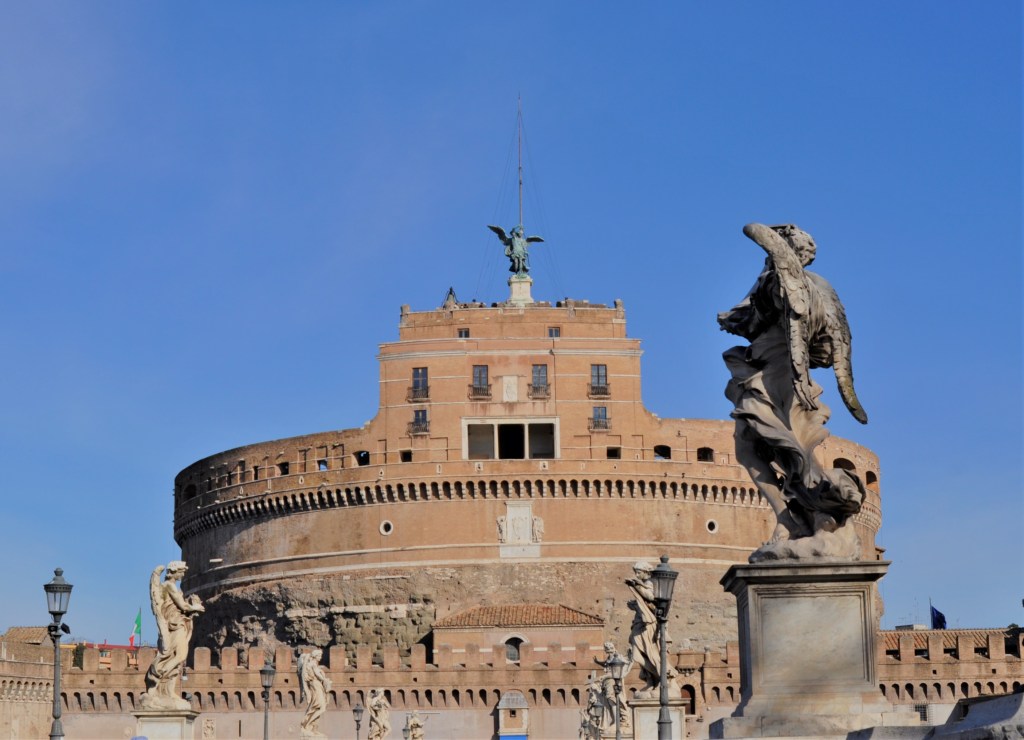
Vatican City is technically not a part of Rome. It is an independent country, with its own independent rulings. It is like a country within a city. However, people go to the Italian capital to see both the Vatican and Rome in a single trip most of the time because of its proximity with each other. Visiting the Vatican would take a day or two, because of the constant flock of tourists and the long lines seeing anything entails. You have to wake up early, don’t be stuck with the rush hour commute and see the Vatican Museums first thing in the morning. You can buy your passes online to skip the long line which would cost you €4 more than the normal but it’s well worth it if you don’t have much time. The Vatican Museums is apparently the most visited tourist attraction in Italy, because of the famed Sistine Chapel which ceiling displays a renaissance masterpiece depicting the connection of God and man, hand-painted by no less than Michaelangelo himself. But more than that of course, are the countless works of art commissioned by the church depicting religious significances and relics kept under the protection of the holy see. After spending the whole morning in the Museum, and probably getting a grub in between, its time to get in another line to see St. Peter’s Basilica. It is the most iconic dome you’ll probably ever see, and unlike most of the churches in Rome which were refitted, this one is made from scratch over St. Peter’s resting place for 120 years in Italian renaissance design. On a usual morning, if you would push your luck and try to see the Basilica first, you’ll see St. Peter’s square circumnavigated by tourists in line waiting to get in. This is what I learned for visiting twice, this line seems to get shorter in the afternoon when most have finished the Basilica and learns that there is a separate entrance for the Sistine Chapel. Sometimes, you have to ride against the tide. Of course, on special occasions, things will be different and people may constantly be in the square waiting for a papal blessing. While waiting in line, you’ll still have something to see, there are statues of the saints around the square, the two fountains on either side, and the first of the 13 obelisks around Rome you’ll surely notice. When you finally got inside, you’ll find the massive worship area, with walls, ceilings, beams, columns and cupola all adorned in Roman inscriptions and set in gold, fitting to be the greatest church built in Christendom. As if you haven’t seen enough in the museum, the sculptures, chapels, tombs and monuments are dotted in each corner representing a significant history on which this church has seen. You can also climb to the top of the dome for some more Euros but I always opted not to because of my fear of heights. But if you would like to see the whole of Vatican in a different perspective, you can walk towards Castel Sant Angelo and climb up its spiral staircase and there you will find apart from Emperor Hadrian’s tomb, the unspoilt view of the San Pietro as well as the river Tiber separating Rome from the Vatican with the bridge adorned with Bernini’s angels. If still you want a higher place to watch the sunset from at the end of a tiring day, the Gianicolo Terrace is just a bus ride away.
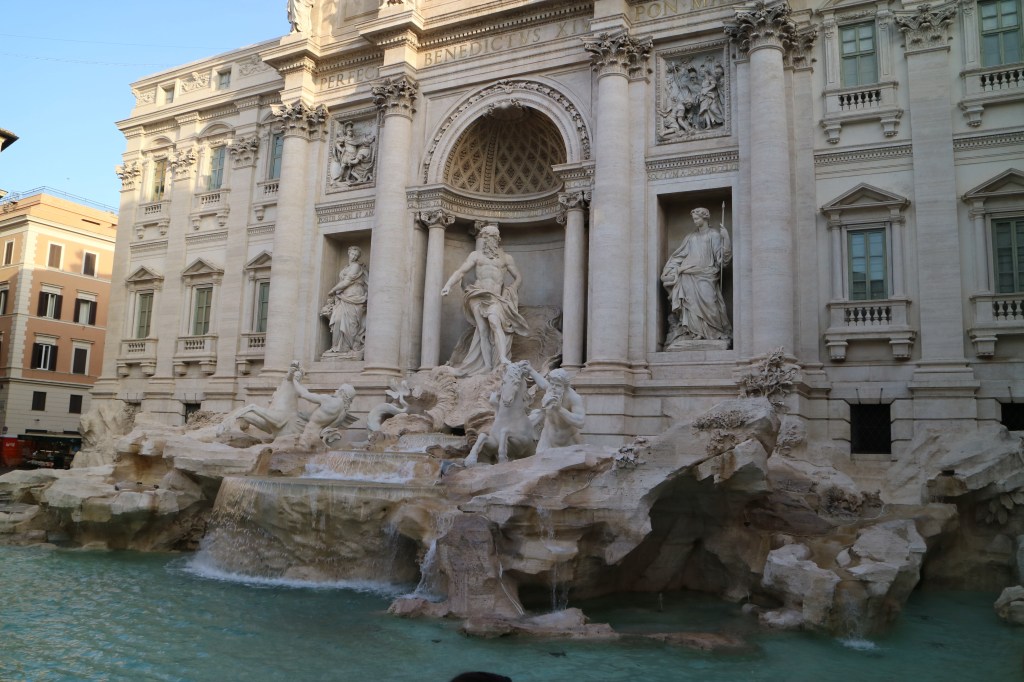
There are still a lot to see within the walls of Vatican, but the Catholic influence on the city isn’t limited to its perimeters. There are over 900 different churches across Rome and they have each of its own characteristics that makes it unique from the others. If you are thinking of doing a pilgrimage on each of these churches, it would probably take you a month to see everything, but since we are not privileged to have a time that long in this city, we decided to join a free walking tour organized by New Rome Free Tours. I’ve done the tour twice as well and I must say that the tour guides are very knowledgeable and professional. I’ve been with Stefan and Flaminia, both of whom are art historians local to Rome and I am thankful for the information they shared to us about their city. We started the tour at the Piazza Spagna at the foot of the famous Spanish steps in front of one of the fountains designed by no other than Gian Lorenzo Bernini. As we go along the tour, we gathered that Bernini’s works were mostly commissioned by the church and church leaders back on the period of renaissance when they wanted to gain popularity by showcasing the beauty of art and also grace the opening of the roman aqueduct, one of the earliest forms of development in that time when water still isn’t supplied through the pipes in other cities. That is why where there is a piazza, there surely is a fountain designed by Bernini to complement and gather people around it. No wonder until now, these fountains still celebrates the gathering of people from all walks of life around the bounty represented by water in the biggest and the most intricately designed, the Trevi fountain.
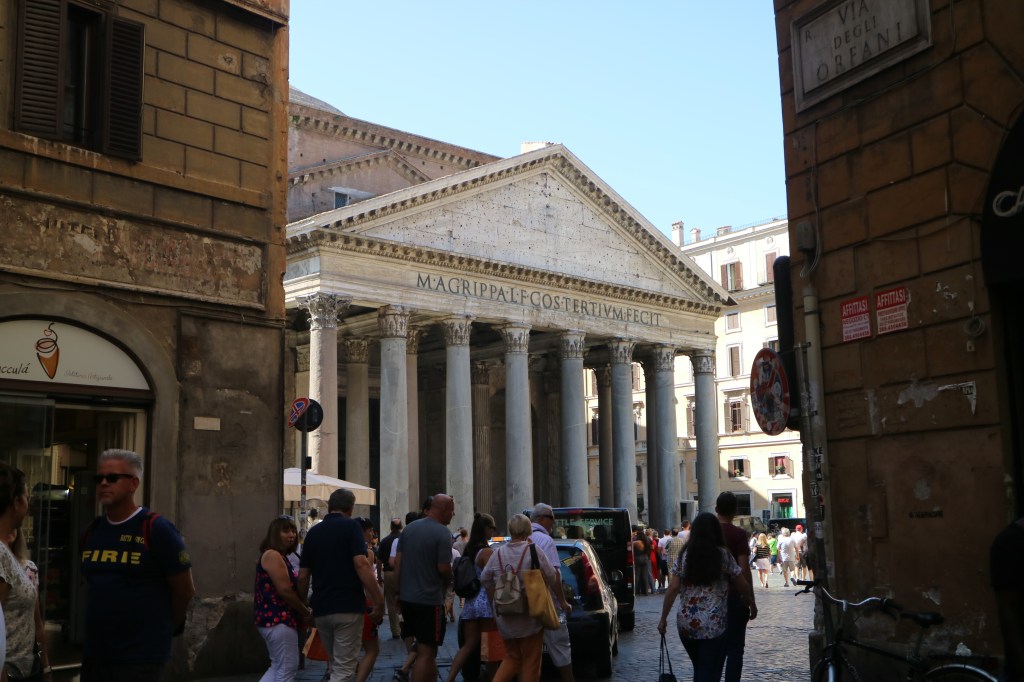
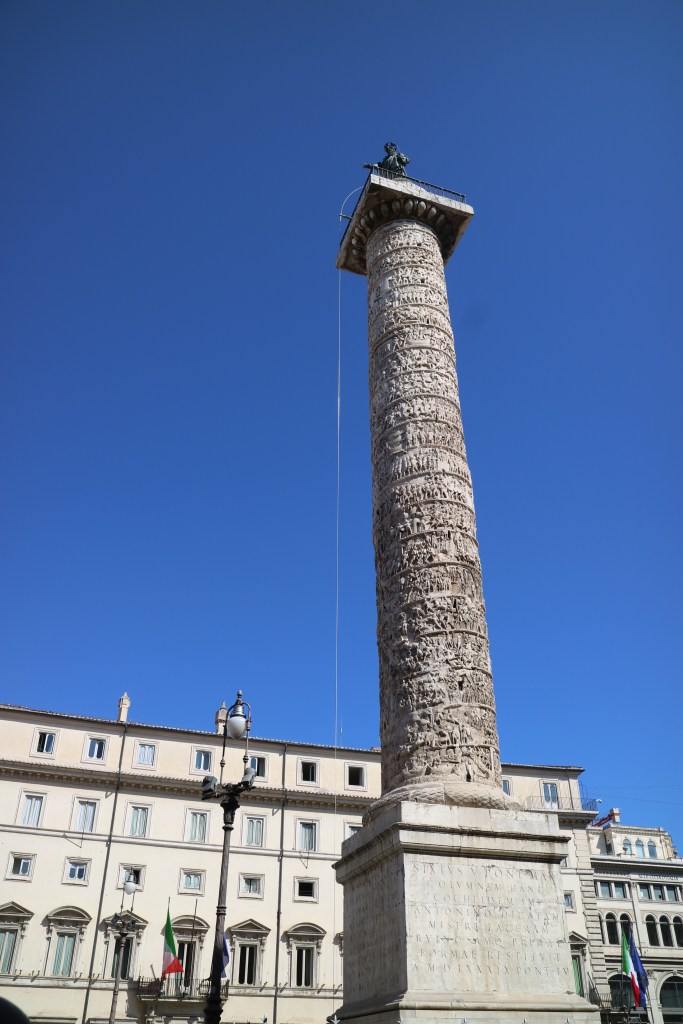
Rome is a city with a lot of secrets, not only with the skeletons hidden underneath the necropolis, but also with its pagan origins. It is probably known to us that the church also led the conversion of Rome from paganism by converting pagan temples to churches by adding sculptures of saints, angels and depictions in the bible exemplified in every corner of the city. The Parthenon is not only an architectural feat with its hollow ceiling originally used for sun worship, it has also been a symbol of changed beliefs when it was then converted to a Catholic church under its new name. Even the obelisks that are originally erected for pagan religious purposes were refitted and changed to hold a cross to symbolize Christianity. The Marcus Aurelius Column in Piazza Colonna is another evidence of refitting when the emperor’s statue atop the column was molten and changed to an image of St. Paul as we see today.
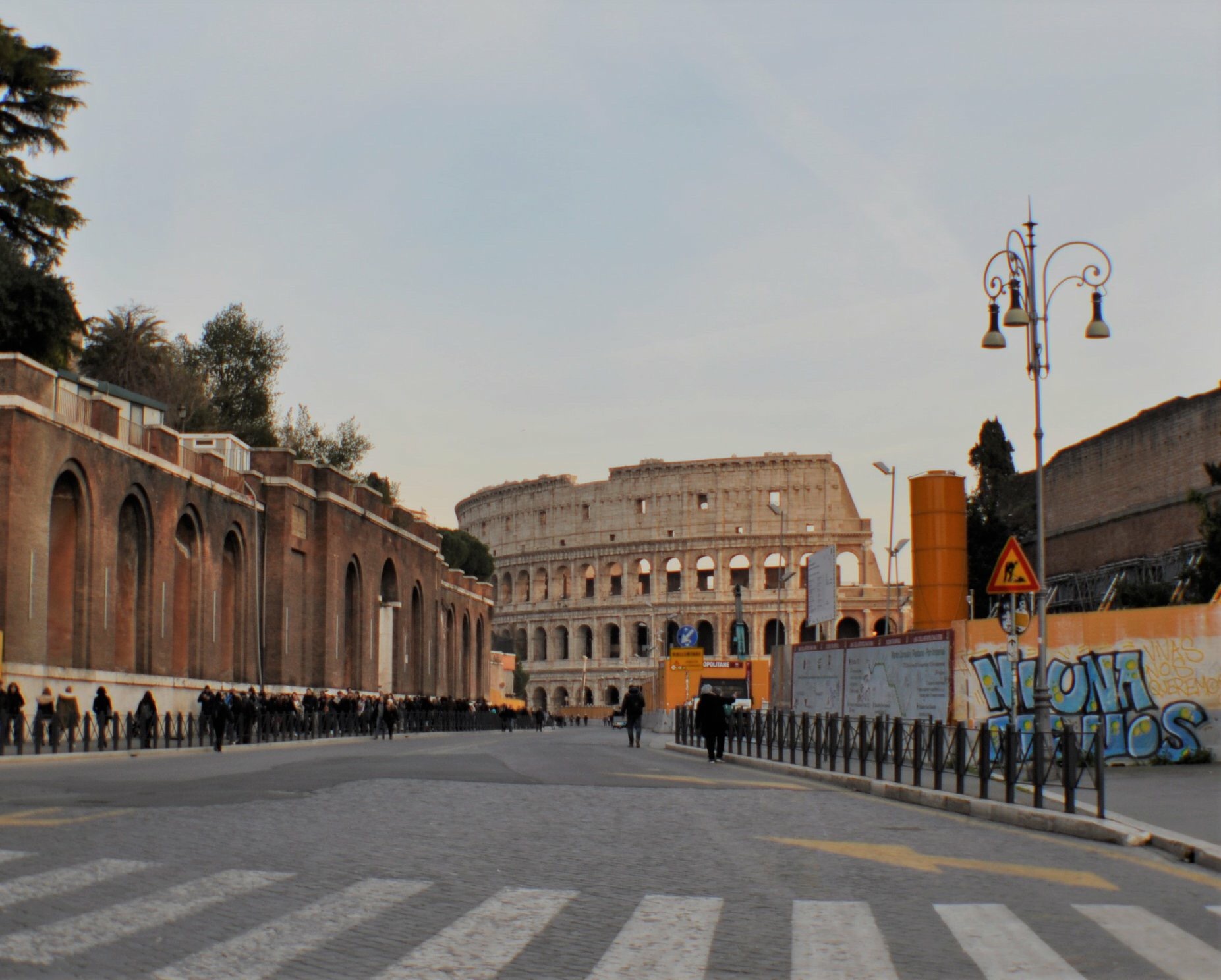
A trip to Rome is never complete without seeing the Colloseo. This massive arena built for the cruel gladiator battles of the old days is probably the highlight of every itinearary. It felt so surreal the first time I saw this wonder, that I can imagine the slaves putting every piece of stone to lay its foundations. It remained intact, although there were visible attempts at reconstruction at certain parts of the structure. The second time I saw it is from the airplane window, instantly recognizable even from a distance. The best way to see the famed Collosseo is on every angle, from the inside, from the outside, from the stark contrast of modernity on the street, and from the Palatine Hill at the Roman Forum. A few steps away from the Colloseo, past the Arch of Constantine and Arch of Titus, is the centre of ancient Roman government excavated and still lies intact to this day. It was a beautiful representation of how Romans ruled back then, with this area that serves like the houses of parliament with emperors, walking to the Palatine and Capitoline Hills to see the view of their magnificent citadel.
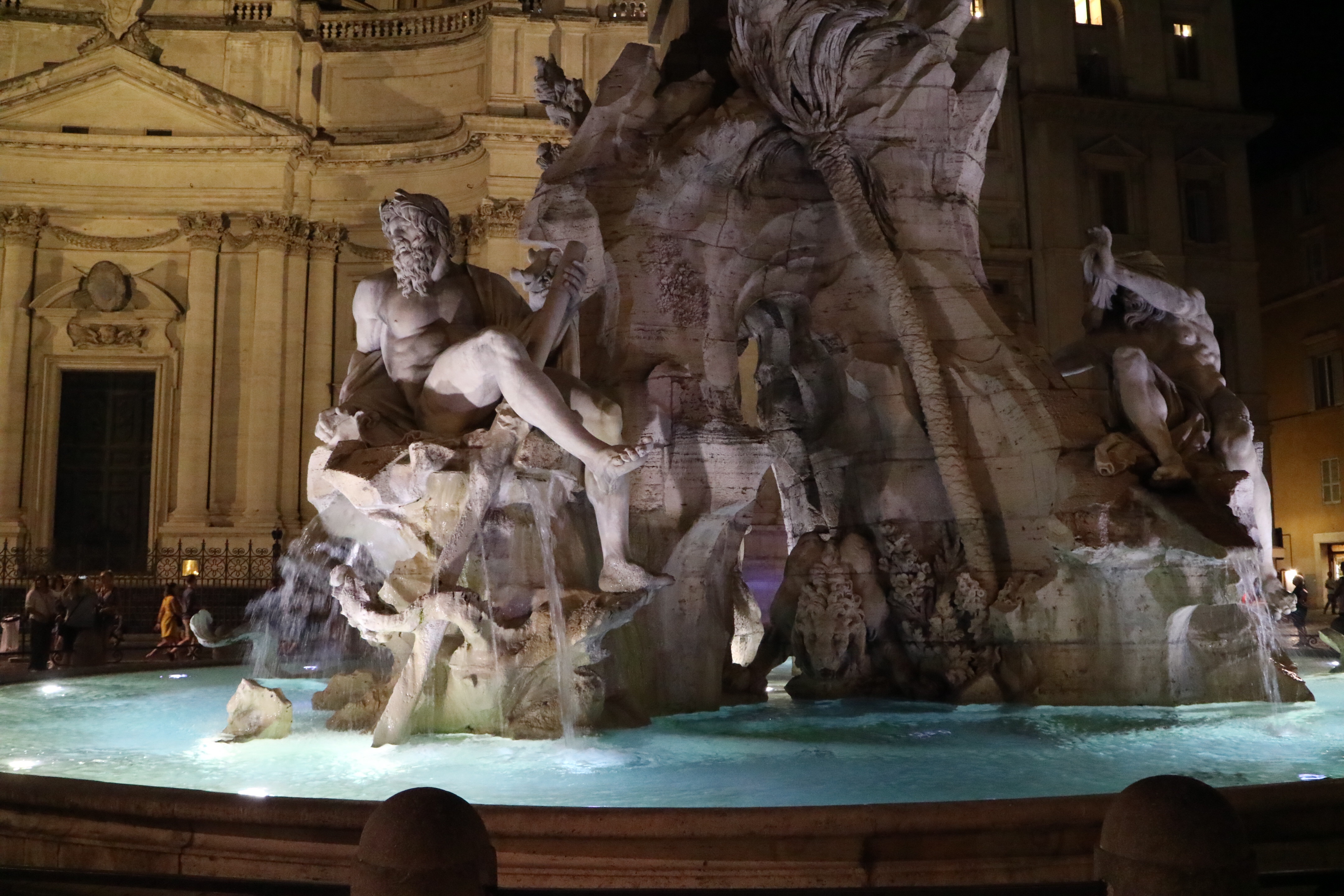
After a full day of historical enlightenment, you might want to grab some proper Italian dinner, and spend the rest of the night in a romantic Piazza. The Trevi fountain area, is always jammed with people most especially when it is alight at night, so you’d probably need to skip that unless you’d wait when tourists dwindle at midnight. The Piazza del Popolo is a massive square, with another obelisk and the twin churches. Many people spend the night here, walking about on a cool night. The Piazza Spagna from this morning’s tour can also be revisited, but the fountains weren’t that big for so many people. But out of all these piazzas, I guess there is nothing as romantic as Piazza Navona. Complete with the fountains of Bernini, an obelisk, a church and the atmosphere of happy people gathering around the waters.
Tips:
There are two airports in Rome, and more likely you’d be arriving in the bigger Fiumicino airport which is in quite a distance to the city. But don’t worry, there are express trains to the city called the Leonardo Express which are comfortable, quiet and only costs €18. You can also arrange for an airport transfer with your hotel, but in case it costs a fortune, this is the best way. The express train arrives at the Rome Termini which is their central station, which might be quite confusing in your first time because this station has exits on every end, an underground leading to the city trains and two Mcdonald’s on either end. So, don’t call your Uber telling them that you’re on an exit near Mcdonald’s because there are two. I’m sure you’ll eventually find your way, but be careful because in a big touristy city, pickpockets are always present.
There are loads of accommodation choices in Rome, but I have already warned you that transportation doesn’t come easily unless you’d always hire a taxi. This is why I think it is best to stay in a hotel near a train station, more specifically Termini area. It gives you the advantage of accessibility to the airport, and also the city as a whole. Plus, there are loads of hotels and restaurants on this area to choose from when you get hungry.
The fastest way to get around Rome is through the trains, but it is almost always filled to the brim, especially on the rush hour. If you set off early for the day, I recommend you take the Trains although it won’t be the recommended route by google maps even though it is fairly straightforward. If you follow my itinerary from Termini station, you’ll just have to take the train towards Battistini and get off at Cipro or Ottaviano where the Vatican is. The same route applies if you will go to the Spanish steps, only you will have to get off at the Spagna station. If you will be heading out the hotel at 8:00-10:00, better get the bus on a route recommended by the google maps, but be patient as the buses take a while. You can also take a nice 15-minute morning walk if you are in the Termini area.
I can say that the Roma pass has been worth it on my first-time seeing Rome as it gave me passes to most of the must-see sights as well as the access to public transportation. However, this won’t include skip the line passes to the Vatican, this is instead covered by the Omnia pass which would cost you €113. The best and cheapest way to get around the highlights of Rome is I think getting a Roma pass 48 or 72 hours depending on how many days you’re staying plus a Vatican Museum pass purchased online. This would only cost you €28/38.50 for the Roma pass, and as low as €17 plus €4 online booking fee for the Vatican Museum pass, altogether that would only cost €59.50 for 72 hours and you can see everything written on this itinerary.
Italian food is one of the most recognised culinary styles in the world. Where best to try it, is of course here, where the pasta is handmade and cooked al dente, the tomatoes are locally produced and the mozzarella has just been made from milk. There are loads of restaurants around, but be mindful of the fact that a restaurant in front of a certain monument would charge more than the restaurant in an alley. Also, most restaurants here apply a service charge. However, it is still must to try the pizza, the pasta and the gelato. You won’t run out of choices, believe me they have loads of ways to cook pasta and several types of pizza, even the gelato is made in a selection of 150 flavours in Gellateria della Palma.
I’ve mentioned earlier that I have joined a walking tour with New Rome Free Walking tours on both of my visits and they’re always superb. It is indeed free but you have to book the tour online. All the details and reminders of the tour are in their website www.newromefreetour.com so be sure to check out those. They won’t charge you anything for joining the tour but please feel free to show your gratitude by tipping at the end of the tour if you think you liked it and has somehow learned from their lovely guides.
The papal audience in the Vatican happens every Wednesday. However, on both of my visits, I always miss this opportunity to meet the Pope himself, I think it’s a matter of luck like the northern lights. This is also for free, and can be possible by downloading the ticket from www.papalaudience.org , just be sure to follow the dress code and the details specified on the site.
Out of all the 900 churches in Rome, it is definitely a must to see the Chiesa Sant Ignazio. Its ceiling is hand painted by a jesuit brother named Andrea Pozzo in a similar way the Sistine Chapel was painted by Michaelangelo. Only here, instead of the prophets, the the continents of the world were depicted on the pillars. Also its cuppola is an artistic illusion, there wasn’t really a dome built as a roof but instead hand painted by Pozzo to look like as if it was a dome from the inside. There wasn’t many people visiting this church, because it is one of the local secrets Rome still keeps under the limelight, but there you go.
 Compass Curator